

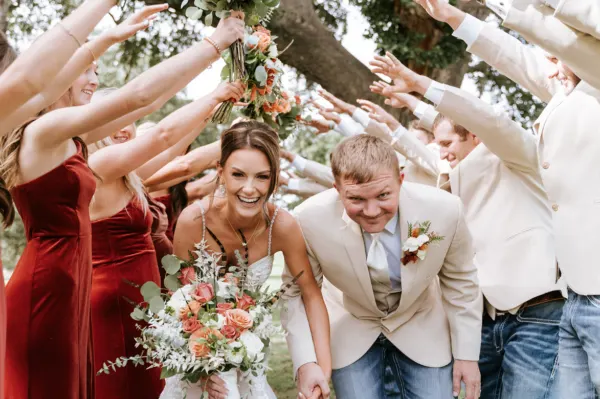
Two downtown Rochester venues, two completely different photography problems.
Thank you for reading this post, don't forget to subscribe!Arbor at Midtown gives you industrial architecture, exposed brick, big windows, and a street-level connection to the city. The Wintergarden by Monroe’s gives you glass, greenery, and light pouring in from overhead.
Couples tour both and pick based on capacity and catering. Photographers walk in and immediately start counting light sources. This breaks down what each building actually does to your pictures, where the good frames live, and what you should plan differently depending on which one you book.
The Core Difference: Side Light Versus Top Light
Everything in this comparison comes back to one thing.
Arbor at Midtown lights people from the side. Tall windows along a wall throw light horizontally across a face, which creates a bright side and a shadow side. That’s the light shape portrait photographers want.
The Wintergarden lights people from above. Glass overhead means light falls down onto foreheads, noses, and shoulders. Overhead light creates shadows under eyes and chins.
Neither is bad. They just require different handling, and a photographer who treats them identically will get one of them wrong.
What Side Light Does at Arbor
Stand a couple three to four feet from a window at Arbor, turned so the light crosses their faces at an angle, and you have a portrait that needs no additional lighting. The shadow side gives dimension. The bright side gives detail.
Move them fifteen feet from that window and the light drops off sharply, because a window is a small source compared to open sky. That falloff is useful. The background goes darker while the subject stays lit, which produces separation without any equipment.
Practically, this means Arbor portraits happen near windows and near the doors. A photographer who knows the building has three or four specific spots mapped and moves through them quickly.
What Top Light Does at the Wintergarden
Overhead glass produces bright, even, generous light. Everyone looks well exposed. Nobody has to squint.
The problem is that it’s directionless. Faces get lit from above with shadow pooling in eye sockets, and skin looks flatter. The fix is straightforward once you know it: turn the subject so they’re catching light from a side wall of glass rather than the ceiling, or bring in a reflector or a low-powered flash to fill from the front.
Photographers who shoot the Wintergarden regularly bring one light for exactly this reason, even in the middle of the afternoon. If a photographer tells you they never use flash and your venue is a glass atrium, ask how they handle overhead shadow.
Side by Side, From Behind the Camera
| Factor | Arbor at Midtown | Wintergarden by Monroe’s |
| Primary light direction | Horizontal, from tall windows | Vertical, from overhead glass |
| Best portrait time | Late afternoon, when sun is low | Midday to mid-afternoon, when the atrium is brightest |
| Backup on a gray day | Windows still work, just dimmer | Excellent, gray sky is a giant softbox |
| Ceiling height | High, industrial | Very high, glass |
| Wall texture | Brick, concrete, metal | Glass, greenery, stone flooring |
| Color cast to correct | Warm from tungsten fixtures, neutral near windows | Green from foliage, especially on skin |
| Reception lighting challenge | Dark corners, needs flash | Goes fully dark after sunset, glass reflects flash |
| Rain plan | Fully indoor already | Fully indoor already |
| Nearby exterior options | Strong, immediate street access | Good, downtown blocks within walking distance |
| Group photo space | Generous, works against brick | Generous, but overhead light needs fill |
Look at that “color cast” row. It’s the sleeper issue at the Wintergarden. Green plants reflect green light onto skin, and if the photographer doesn’t correct for it in editing, everyone in the gallery looks slightly ill. It’s fixable and completely invisible when handled. Ask about it.
Where the Frames Actually Are at Arbor at Midtown
The building’s strength is texture. Brick, steel, and concrete give a photographer something to work against, and the surrounding Midtown blocks extend that.
Interior Positions Worth Knowing
Along the window wall. The obvious one, and it earns it. Portraits here in late afternoon get warm directional light with the city visible behind.
Against exposed brick, away from windows. Underexposed background, subject lit from the side, brick texture holding just enough detail. This is the frame that reads as editorial without any styling.
The entry and stair areas. Vertical lines, hard edges, and usually a light source at one end. Good for bridal party groups where you want structure instead of a row of people.
Overhead structural elements. Shooting up from a low angle with beams and ceiling in frame gives a sense of the building’s scale. One or two of these per wedding, not more.
The Street Is Part of the Venue
Downtown Rochester around Midtown offers a real advantage: you can walk out the door and be in a genuinely urban setting in under two minutes. Painted walls, older facades, crosswalks, reflections in storefront glass, and the Liberty Pole a short distance away.
This matters for a practical reason. If your portrait window gets compressed because the ceremony ran late, a photographer can get strong exterior frames in ten minutes without a shuttle. At many suburban venues that isn’t possible.
Plan for a short walk in your timeline. Fifteen minutes buys you a distinctly different set of images.
Where the Frames Are at the Wintergarden
The Wintergarden’s strength is the opposite. It’s atmosphere rather than texture.
The Atrium Is the Whole Sell
A ceremony under glass with greenery around it produces wide frames that no brick building can match. The overhead shot down the aisle. The wide angle showing plants, glass, and guests. The couple small in a very tall room.
Those wides are the reason to book it. A photographer should be shooting the ceremony from multiple heights, including from any accessible upper level, because the vertical dimension is what makes the space work.
Portraits Need More Deliberate Placement
Because the light comes down, portrait spots are chosen for where light comes sideways instead. That usually means near a glass wall rather than under the center of the atrium, or in a doorway, or at the transition into an adjoining space.
Photographers who’ve shot the building know these positions. Ones who haven’t will default to the prettiest-looking spot and produce technically weaker images. This is a genuine argument for hiring someone with experience in your specific venue, and it’s the whole reason Rochester Wedding Photography teams keep venue notes on file.
After Dark It Becomes a Different Building
This surprises couples. During the day the glass is the feature. After sunset, glass goes black and reflective, and the atrium becomes a dark room with mirrors on every surface.
Flash bounced toward glass comes straight back into the lens. Photographers handle it by aiming light carefully, using off-camera flash placed low, and shooting angles that avoid direct reflection.
Ask specifically about the reception plan. A photographer who says “I’ll figure it out on the day” has not thought about it.
One Line for Winter Couples
Both venues are fully indoor, which in Rochester between December and March is worth more than any other feature on the list.
Timeline Differences That Actually Matter
The buildings should be scheduled differently.
| Timeline Element | Arbor at Midtown | Wintergarden by Monroe’s |
| Best time for couple portraits | 60 to 90 minutes before sunset | Early to mid afternoon, before light drops |
| Ceremony light quality | Consistent, window-dependent | Changes fast, peaks midday |
| Time needed for exterior frames | 15 minutes, adjacent streets | 20 to 25 minutes, short walk required |
| Family photos | Anywhere against brick, quick | Choose a wall, avoid center atrium |
| Golden hour value | High, urban surfaces catch warm light | Moderate, atrium light dims quickly |
| Flash needed from | Roughly 90 minutes before sunset indoors | At sunset, hard cutoff |
The most common scheduling mistake at the Wintergarden is putting portraits after a late-afternoon ceremony in winter. By 4:45 in December the atrium is dark and the venue’s best asset is gone. Move the first look earlier and the problem disappears.
At Arbor, the common mistake is the reverse: doing everything early and missing the late light on the brick and the street.
Which One Fits Your Gallery
Answer these and the choice gets clearer.
- Do you want your pictures to look like Rochester, or like a garden? Arbor puts the city in the frame. The Wintergarden removes it.
- Is your ceremony indoors at the venue or elsewhere? If you’re getting married at a church and coming for the reception, the Wintergarden’s daytime advantage matters less.
- How much do you care about wide, dramatic ceremony frames? That’s the Wintergarden’s clearest win.
- Do you want texture and edge, or softness and greenery? This is the honest aesthetic split.
- What time of year? Summer favors the Wintergarden’s long bright afternoons. Late fall and winter favor Arbor’s window light and city exteriors, which work at any hour.
- How many guests? Confirm current capacities directly with each venue, because room configurations change and photography plans depend on how tightly people are packed.
Guest Count Changes Which Building Wins
Room size interacts with photography in ways couples don’t anticipate.
A large guest count in the Wintergarden fills the floor, and the wide overhead ceremony frames get better. More people equals more visual weight in a very tall room. With 60 guests in the same atrium, the space swallows them and the wide shots look sparse.
Arbor works in reverse. The building’s texture carries the frame even with a small group, and a smaller crowd means more room to shoot from angles that aren’t blocked by chairs.
| Guest Count | Arbor at Midtown | Wintergarden by Monroe’s |
| Under 75 | Strong, brick carries the frame | Space can feel empty in wide shots |
| 75 to 130 | Strong | Strong, this is the sweet spot |
| 130 plus | Tight for photographer movement | Excellent, scale is the venue’s asset |
If you’re planning a smaller wedding and you love the Wintergarden, ask about seating arrangement. Tighter rows in a smaller footprint fix the sparseness problem completely, and it costs nothing.
The Chair Problem
At both venues, the ceremony chair layout determines whether a photographer can get to the aisle-facing angles. A wide center aisle with narrow side gaps forces everything to be shot from the back or from directly beside the front row.
Ask your planner or coordinator to leave a 24-inch gap between the outer chairs and the wall on at least one side. It’s an invisible change to guests and it opens up an entire category of images: the couple from a side angle with guests soft in the background.
What to Tell Your Photographer Either Way
Send them the venue name early, not a month before. Ask whether they’ve shot there. If not, ask whether they’ll walk the space beforehand, and expect a yes.
Give them your ceremony start time and let them tell you when portraits should happen. Do not build the timeline first and hand it over. At both of these venues, light dictates the schedule, and a photographer who sees the ceremony time can tell you within a minute whether the plan works.
Finally, ask for one full gallery from each venue if they have it. Comparing complete galleries from the two buildings is the fastest way to see the difference this article describes, in the specific hands of the person you’re hiring.
Conclusion
Arbor at Midtown is a side-lit, textured, urban building that rewards late-afternoon portraits and a short walk into downtown Rochester. The Wintergarden by Monroe’s is a top-lit glass atrium that produces ceremony frames nothing else in the city can match, then goes dark and reflective after sunset.
Pick Arbor if you want images with edge, city context, and consistent light regardless of season. Pick the Wintergarden if you want an airy, plant-filled ceremony and you’re scheduling your portraits while the sun is still up.
Then build the timeline around the light rather than around the caterer, and tell your photographer the venue the day you book it. Both buildings photograph beautifully. They just don’t photograph the same way.