

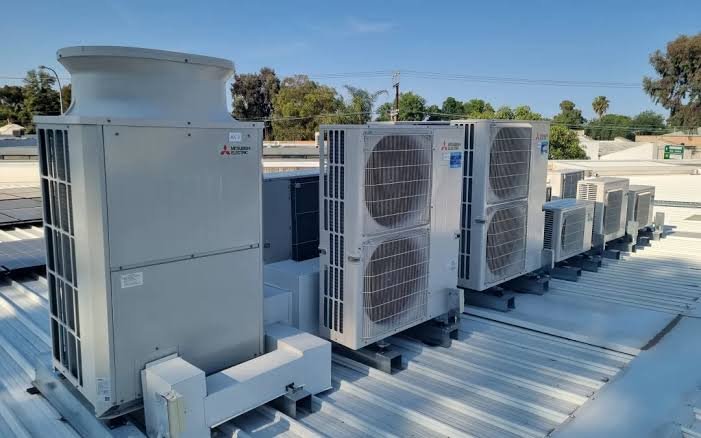
A homeowner feels cold in February. They call three HVAC companies. All three quote a bigger, newer furnace or a heat pump. One of them installs it.
Thank you for reading this post, don't forget to subscribe!The house is still cold in the corners. The bill barely moved. And now there is a $16,000 machine sized for a building that leaks like a tent.
This is the most common and most expensive sequencing error in Canadian home upgrades. It is also completely avoidable, because the fix costs a fraction of the equipment and takes a fraction of the time.
Your Furnace Does Not Heat Your House. Your Envelope Keeps It Heated.
The heating system adds energy. The building shell decides how long that energy stays.
That shell is called the building envelope. It is every surface separating conditioned indoor air from the outdoors: walls, roof, floor over crawlspace, foundation walls, windows, doors, and the slab underneath. It also includes every gap, crack, and hole through those surfaces.
Heat leaves through two paths. Conduction moves it through solid materials, and insulation slows it down. Air leakage carries it out physically, warm air escaping high in the house and cold air pulled in low to replace it.
Six sides, not four
Homeowners picture their house as walls. Heat loss does not work that way.
| Envelope surface | Typical share of heat loss in an older Canadian home | Usually noticed by homeowners |
| Air leakage through gaps | 25% to 40% | Rarely, it is invisible |
| Attic and ceiling | 15% to 25% | Sometimes, via ice dams |
| Basement and foundation walls | 15% to 25% | Almost never |
| Above-grade walls | 12% to 20% | Sometimes, cold wall surfaces |
| Windows and doors | 10% to 20% | Constantly, and blamed for everything |
| Basement slab and rim joist | 5% to 10% | Never |
Notice that the item homeowners complain about most, windows, is rarely the largest, and the item that is usually the largest, air leakage, is the one nobody can see.
One Wrong Number Turns Into Four Expensive Decisions
Here is the chain reaction, and it is worth reading slowly because each link costs real money.
It starts with a heat loss number taken from the wrong house
Every properly designed system begins with a heat loss calculation. In Canada the standard is CSA F280-12. The calculation takes your dimensions, insulation levels, window specs, and measured air leakage, and returns a number in BTU per hour: how much heat the house needs on the coldest design day for your city.
Run that calculation on a leaky, underinsulated 1970s house and you get a big number. Run it after air sealing and attic insulation and you get a much smaller one.
Both numbers are correct. They describe different buildings. The question is which building you want to buy equipment for.
| House condition (1,900 sq ft, Ottawa) | Airtightness | Attic | Design heat loss | Equipment implied |
| As found | 9 ACH50 | R-24 | About 62,000 BTU/h | 5 ton heat pump, 20 kW backup |
| After air sealing only | 5 ACH50 | R-24 | About 51,000 BTU/h | 4 ton heat pump, 15 kW backup |
| After sealing plus attic to R-60 | 5 ACH50 | R-60 | About 45,000 BTU/h | 3.5 ton, 15 kW backup |
| Sealing, attic, basement walls | 4 ACH50 | R-60 | About 37,000 BTU/h | 3 ton heat pump, 10 kW backup |
Same house, four moments in time, and the equipment on the last line costs thousands less than the equipment on the first.
Error one: you pay for tonnage you will never use
Heat pump and furnace pricing scales with capacity. In most Canadian markets, each additional ton of cold-climate heat pump capacity adds roughly $1,200 to $2,200 to an installed price, and each 5 kW of electric backup adds $400 to $900 including the wiring.
Going from a 5 ton system to a 3 ton system on the table above saves in the range of $3,000 to $6,000 on the equipment purchase alone. The envelope work that got you there costs $4,000 to $9,000, and it keeps paying every month for thirty years. The oversized equipment just costs more.
Error two: oversized equipment runs worse, not better
This part is counterintuitive, so it gets skipped in sales conversations.
A furnace or heat pump that is too large for its house reaches the thermostat setpoint quickly, shuts off, then restarts a few minutes later. That is short cycling, and it damages performance in several ways at once.
- Startup is the least efficient part of any cycle. More starts means more waste.
- Coils and heat exchangers need runtime to reach steady-state efficiency. Short runs never get there.
- Dehumidification in cooling mode requires sustained airflow across a cold coil. A short cycle cools the air without drying it, leaving the house clammy at 22°C.
- Air distribution suffers. Rooms far from the furnace need long runs to get their share. Short cycles favour the rooms closest to the equipment, which is exactly the temperature imbalance the homeowner was trying to fix.
- Compressors, igniters, and contactors wear on cycles, not on hours. More cycles means a shorter life.
An oversized system delivers worse comfort than a correctly sized one. Homeowners often respond by turning up the thermostat, which raises the bill again.
Error three: you may trigger an electrical upgrade you did not actually need
This one stings. A 5 ton heat pump with 20 kW of electric backup draws a great deal of current. Add that to a 100 amp service and a load calculation under the Canadian Electrical Code may come back over capacity.
Now you are quoted $3,000 to $8,000 for a service upgrade, plus utility coordination and possible trenching.
The 3 ton system with 10 kW of backup, on the improved envelope, often fits inside the existing service, sometimes with a load management device costing a few hundred dollars. The envelope work did not just save equipment money. It removed an entire second project.
Error four: you are locked in for fifteen to twenty years
A furnace lasts 15 to 25 years. A heat pump lasts 12 to 20. Once it is installed, the oversizing is permanent for the life of that machine.
If you seal and insulate three years later, the equipment becomes even more oversized. The short cycling gets worse. You paid extra to buy it, then made it perform worse by fixing your house afterward.
There is no way to shrink a compressor.
The Two Orders, Side by Side
Same house, same total ambition, two sequences. The difference is money and outcome.
| Step | Equipment-first path | Envelope-first path |
| Year 1 | 5 ton heat pump, 20 kW backup: $24,000 | Assessment plus air sealing: $3,500 |
| Year 1 continued | Panel upgrade to 200 A: $5,500 | Attic to R-60: $4,000 |
| Year 2 | Air sealing: $3,500 | Basement walls and rim joist: $9,000 |
| Year 3 | Attic to R-60: $4,000 | 3 ton heat pump, 10 kW backup: $18,000 |
| Year 4 | Basement walls: $9,000 | No panel upgrade needed: $0 |
| Total spent | $46,000 | $34,500 |
| Final equipment fit | Oversized by roughly 40% | Correctly sized |
| Comfort outcome | Short cycling, uneven rooms | Long steady runs, even temperatures |
| Annual bill | Higher than it should be | Lower, permanently |
Twelve thousand dollars of difference, and the cheaper path delivers the better house.
Cost Per Unit of Energy Saved Is the Only Ranking That Matters
Contractors rank upgrades by what they sell. Homeowners should rank them by what each dollar buys.
| Measure | Typical cost | Typical annual energy reduction | Rough payback |
| Attic hatch sealing and weatherstrip | $80 to $250 | 1% to 2% | Under 2 years |
| Rim joist air sealing and insulation | $1,200 to $3,000 | 5% to 9% | 4 to 8 years |
| Whole-house air sealing | $1,500 to $5,000 | 12% to 20% | 3 to 7 years |
| Attic top-up to R-60 | $2,500 to $5,500 | 8% to 14% | 5 to 10 years |
| Basement wall insulation | $6,000 to $14,000 | 10% to 16% | 9 to 16 years |
| Cold-climate heat pump replacing oil | $16,000 to $24,000 | 30% to 55% of cost | 6 to 12 years |
| Cold-climate heat pump replacing gas | $16,000 to $24,000 | Varies by rates | 12 to 25 years |
| Triple-pane window replacement | $15,000 to $40,000 | 5% to 10% | 20 to 40 years |
The top of that list is unglamorous. Nobody posts photos of caulk. It is also where the money is.
Some Complaints Have No Equipment Solution At All
This deserves its own space because it accounts for a large share of wasted HVAC spending.
A homeowner says the upstairs bedroom is freezing. They replace the furnace. The bedroom is still freezing.
Of course it is. The bedroom was cold because of an uninsulated knee wall, a leaking attic bypass at the top plate, or an unsealed duct running through a cold attic. None of those are affected by what sits in the mechanical room. Adding more heat at the source only means more heat leaves through the same defect.
Cold floors over a garage, drafts at baseboards, a room that never warms up, condensation on window frames, ice dams at the eaves, and dust that reappears two days after cleaning are all envelope symptoms. Every one of them gets misdiagnosed as an equipment problem somewhere in Canada today.
The test is simple. If the problem is that some rooms differ from other rooms, it is almost always the envelope or the distribution, not the heat source.
“But My Furnace Is Dying Right Now”
Fair. Equipment does not fail on a convenient schedule, and nobody is going through a Manitoba January without heat while they schedule an air sealing crew.
There is a bridge strategy that keeps you from getting locked in.
- Get the blower door test and the assessment done immediately. It takes a few hours and can usually be booked within days.
- Have the heat loss modelled twice: as the house stands, and as it will stand after the envelope work you commit to doing within 24 months.
- Size the new equipment to the second number, not the first.
- If there is a gap during that transition, cover it with slightly more backup capacity rather than a bigger compressor. Backup is cheap to add and cheap to leave idle.
- Do the envelope work on the agreed timeline. Write the dates down.
Modelling the future house is standard practice for anyone doing energy work properly. It requires the assessment to come first, which is the whole point.
If the furnace has genuinely failed in mid-winter and there is no time for any of this, a temporary repair or a rental unit for a few weeks costs far less than twenty years of wrong-sized equipment.
The One Thing to Do This Week
Book a blower door test before you accept a single HVAC quote, because a contractor who has never seen your leakage number is sizing your equipment with a guess.
What to Actually Do
The order is envelope, then equipment, then generation. It is not a preference or a philosophy. It follows from the fact that equipment is sized to a building, so changing the building after you buy the equipment wastes the money you spent.
Three things to take away:
- Get a measured assessment with a blower door test before shopping for any heating system. The result changes what you should buy.
- Spend the first several thousand dollars on air sealing and attic insulation. Cost per unit saved beats every other measure available, and both are done in days.
- Insist that any HVAC quote be based on a CSA F280-12 calculation using your post-retrofit envelope numbers. Ask to see the printout.
A contractor who resists all three is telling you something useful about how they work. Vendor-neutral advice exists precisely because the person selling the box has no reason to suggest you need a smaller one.